Exam content, format & past papers
The National Chemistry Olympiad is decided by a single three-part exam in April: 60 multiple-choice questions, a written free-response paper, and a laboratory practical. This page explains exactly what each part demands, the full syllabus it draws on, and how to train with the 1999 to 2025 library of past papers and answer keys.
The National Exam in three parts
More than 1,000 nominated students sit the National Exam each April, usually hosted at universities and colleges. Only students put forward by their ACS Local Section coordinator reach this stage, so the field is already strong. It is one exam in three distinct sittings, and every part counts toward the score that determines the Top 20, High Honors, and Honors and, ultimately, the twenty invitations to the June Study Camp.
60 multiple-choice questions
A broad, fast-paced test of chemical knowledge across the whole syllabus. Sixty questions reward speed, accuracy, and instant recall of core concepts, from stoichiometry and periodicity to equilibrium and electrochemistry. There is no partial credit, so disciplined elimination and time management matter as much as the chemistry itself.
Written free response
Multi-step problems that ask students to show their reasoning in full. Here the marks go to the working, not just the final number: balanced equations, derivations, mechanisms, and clearly justified answers. This is where genuine chemical understanding separates strong students from those who have only memorized facts.
Laboratory practical
A hands-on session at the bench. Students perform real procedures, record and process data, and draw conclusions under time pressure. Technique, accurate measurement, and safe, methodical work are tested directly, mirroring the practical examination at the International Chemistry Olympiad.
What’s tested: AP-level, and well beyond
The National Exam is built on the foundation of AP Chemistry, but it does not stop there. AP-level fluency is the baseline expected of every competitor; the questions that decide the Top 20 reach into depth, breadth, and reasoning that go beyond a standard high-school course. Students who advance treat AP material as the starting point, not the finish line.
In practice that means mastering the same topics more deeply: longer derivations, less familiar contexts, and problems that combine two or three ideas at once. A single question might join thermodynamics with equilibrium, or kinetics with reaction mechanisms, and expect a clean, fully justified answer. The exam rewards chemists who understand why, not just students who can recall what.
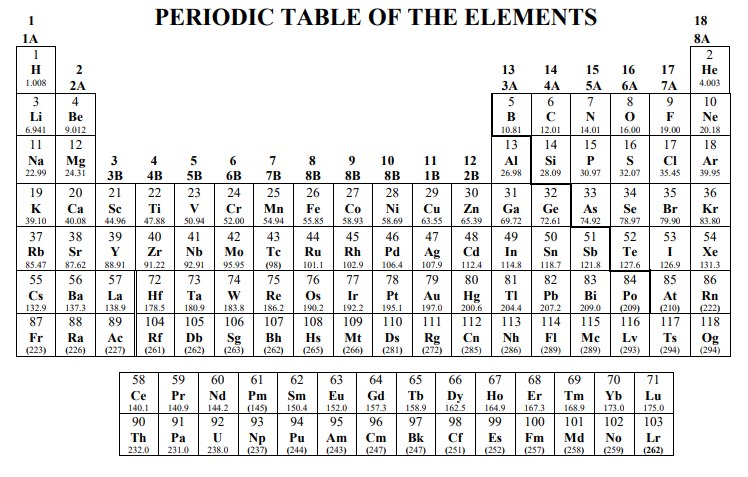
Every element is fair game. Periodic trends, descriptive chemistry, and the behavior of unfamiliar compounds all appear, so a strong command of the periodic table and the patterns it encodes is essential preparation rather than optional polish.
For depth beyond the AP textbook, the most useful references are university-level standards: Atkins Chemical Principles for general and physical chemistry, and Carey Organic Chemistry for mechanisms and structure. They are not a substitute for practice, but they fill the gaps an AP course leaves and give the reasoning the free-response paper expects.
Past papers & answer keys: your core training set
The single most valuable preparation resource is the archive of real exams. USNCO Local and National exams, complete with answer keys, are available going back many years, from 1999 through 2025. That is more than two decades of authentic questions written to the exact standard students will face, far better practice than any textbook problem set.
The archive includes both tiers, and each has a job. Local exams make excellent early-season practice and a fair gauge of readiness for the qualifying round each March. National exams set the true target: harder, deeper, and written to the level that decides Team USA. Working through both, in order of difficulty, lets a student climb from one standard to the next.
The pattern that works is simple and repeatable: attempt a paper, score it, and study every question you missed until you could re-derive the answer from scratch. Over a season this turns recurring weaknesses into reliable marks, and builds the speed and composure the multiple-choice and free-response papers both demand.
A four-step training loop
Run the same loop on every paper, from your first untimed attempt to your last full mock:
- Learn the style. Work older papers untimed to absorb the question patterns and the level of depth.
- Simulate exam day. Sit recent papers in full, strictly timed, in one quiet block.
- Mark honestly. Score against the official answer key with no second guesses or excuses.
- Close the gaps. Re-derive every missed question until the method is automatic, then move on.
Repeat across a season and recurring weak spots turn into reliable marks.
Exam questions, answered
Part I is 60 multiple-choice questions, Part II is a written free-response paper, and Part III is a laboratory practical. All three are sat in April, and together they decide the National honors and selection for the Study Camp.
The syllabus covers stoichiometry, thermodynamics, kinetics, equilibrium, acids and bases, electrochemistry, bonding and structure, periodicity, organic chemistry, and laboratory technique. The whole periodic table is fair game, so descriptive chemistry appears alongside the core quantitative topics.
AP Chemistry is the baseline. The National Exam covers the same topics but in far greater depth, with multi-step problems that combine several ideas at once and reach well beyond a standard high-school course. Treat AP material as your starting point, not the finish line.
USNCO Local and National exams with answer keys are available going back many years, from 1999 through 2025. They are the most valuable preparation resource because they are real questions written to the exact standard students will face on exam day.
In Part III students perform real procedures at the bench, record and process their data, and draw conclusions under time pressure. It tests practical technique, accurate measurement, and safe, methodical work, mirroring the practical examination at the International Chemistry Olympiad.
Build a strong AP-level foundation, deepen it with reference texts such as Atkins Chemical Principles and Carey Organic Chemistry, and make timed past papers your core training material. Sit them under exam conditions, mark honestly against the key, and study every question you miss until the method is automatic.
Train for the three-part exam
Get a season-long study plan, a guided past-paper schedule, and coaching built around the National Exam format, so you walk into April ready for every part.